
Pine needle tea is a traditional drink that has been enjoyed for centuries due to its potential health benefits, most notably the prevention of scurvy due to its high vitamin C content.
This tea has a slightly earthy taste with a citrusy note. It is a very pleasant tea with a wonderful, comforting aroma.
Potential Health Benefits of Pine Needle Tea
Some of the possible pine needle tea benefits include:
- Rich in antioxidants: Pine needles are a very rich source of antioxidants and contain significant amounts of vitamin C.
In fact, pine needle tea contains as much as 4-5 times the amount of vitamin C found in orange juice.
Another tea rich in vitamin C is Rose Hip Tea. - Anti-inflammatory properties: Pine needle tea has anti-inflammatory properties that may help to reduce inflammation in the body, which is linked to many chronic diseases.
- Boosts the immune system: Pine needle tea may help to boost the immune system due to its high vitamin C content.
- Rich in vitamins and minerals: Along with vitamin C, pine needle tea contains various other vitamins and minerals such as Vitamin A, potassium, and calcium.
- May help with respiratory issues: Pine needle tea may help to alleviate respiratory issues such as coughs, colds, and bronchitis due to its expectorant properties.
- May aid in digestion: Pine needle tea may help to improve digestion and alleviate gastrointestinal issues such as bloating and gas.
- Soothes a sore throat: The tea’s anti-inflammatory properties and pleasant citrusy flavor may help to soothe an inflamed throat
It is important to note that pine needle tea should be consumed in moderation and should not be used as a substitute for medical treatment.
As with any herbal remedy, it is advisable to consult with a healthcare professional before consuming this tea, especially if you have any pre-existing medical conditions or are taking medication.
**This page may contain affiliate links to products I have used or recommend. If you purchase something from this page, I may receive a small percentage of the sale at no extra cost to you. For more information, click here.**

What Type of Pine Needles to Use?
If you are going to harvest your own pine needles, there are a few things to remember. Not all types of pine needles are suitable for making tea.
It is important to harvest pine needles from an edible pine tree and to avoid using needles from trees that have been treated with pesticides or other chemicals.
Some species of pine trees used for making pine needle tea are Eastern white pine (pinus strobus), Western white pine (Pinus monticola) Red pine (Pinus resinosa), Jack pine (Pinus banksiana), and Noble fir (Abies procera).
It is important to note that some pine trees, such as the Norfolk Island pine (Araucaria heterophylla), Lodgepole pine or shore pine ( Pinus contorta), and Ponderosa pine (pinus ponderosa) among many others, are potentially toxic and should not be used to make tea.
Ponderosa pine should not be used by pregnant women as they have the potential to cause serious health issues and even miscarriage.
Needles from Yew trees are also highly toxic and should not be consumed. Their needles differ from pine needles in that they are flat needles and the underside of the needle is white.
If you are new to foraging it is a good idea to have someone more knowledgeable check the needles for you before making your tea.
Alternatively, you can purchase pine needle tea from specialty stores that sell herbal teas or from Amazon.
Additionally, the age of the needles makes a difference in the quality of the tea. Using only fresh pine needles from the current season is recommended, as older needles can become bitter and may contain harmful compounds.
Pick the younger needles from the tips of the branches for a sweeter-tasting tea.

How to Make Pine Needle Tea
Pine needle tea is easy to make once you have gathered your pine needles. Here are the simple steps to make this delicious tea.
Ingredients:
1 cup of pine needles (from an edible pine tree)
4 cups of water
Honey or other sweeteners (optional)
Instructions:
- Rinse the fresh needles under cold water to remove any dirt or debris.
- Chop the needles into smaller pieces using a sharp knife or scissors.
- In a medium-sized pot or kettle, bring 4 cups of water to a boil.
- Add the chopped pine needles to the hot water and reduce the heat to low.
- Let the tea simmer for 10-15 minutes, stirring occasionally. Don’t allow the tea to boil, just simmer gently.
- Remove the pot from the heat and let it cool for a few minutes.
- Strain the tea through a fine mesh tea strainer or cheesecloth to remove the pine needles.
- If desired, sweeten the tea with honey or other sweeteners to taste.
- Enjoy your freshly brewed pine needle tea.
Note: The flavor and strength of the tea may vary depending on the type of pine tree used and the length of time the tea is steeped.
You can adjust the recipe to suit your taste preferences by adding more or fewer pine needles, steeping the tea for longer or shorter periods of time, or adding other herbs or spices as well as a slice or two of lemon or a squeeze of lemon juice.
Pine Needle Tea
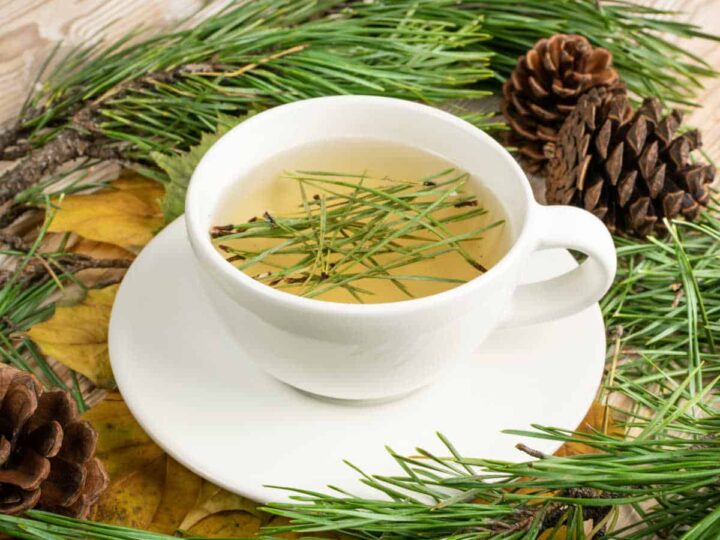
Pine needle tea has a slightly earthy taste with a citrusy note. It is overall a very pleasant-tasting tea, with a wonderful, comforting aroma.
Ingredients
- 1 cup of pine needles (from an edible pine tree)
- 4 cups of water
- Honey or other sweeteners (optional)
Instructions
- Rinse the fresh needles under cold water to remove any dirt or debris.
- Chop the needles into smaller pieces using a sharp knife or scissors.
- In a medium-sized pot or kettle, bring 4 cups of water to a boil.
- Add the chopped pine needles to the hot water and reduce the heat to low.
- Let the tea simmer for 10-15 minutes, stirring occasionally. Don't allow the tea to boil, just simmer gently.
- Remove the pot from the heat and let it cool for a few minutes.
- Strain the tea through a fine mesh tea strainer or cheesecloth to remove the pine needles.
- If desired, sweeten the tea with honey or other sweeteners to taste.
- Enjoy your freshly brewed pine needle tea.
Notes
1. The flavor and strength of the tea may vary depending on the type of pine tree used and the length of time the tea is steeped.
2. You can adjust the recipe to suit your taste preferences by adding more or fewer pine needles, steeping the tea for longer or shorter periods of time, or adding other herbs or spices as well as a slice or two of lemon or a squeeze of lemon juice.
Nutrition Information
Yield 4 Serving Size 1 cupAmount Per Serving Calories 16Total Fat 0gSaturated Fat 0gTrans Fat 0gUnsaturated Fat 0gCholesterol 0mgSodium 10mgCarbohydrates 4gFiber 0gSugar 4gProtein 0g