
White clover tea has a delicate and subtle flavor that is often described as mild, slightly sweet, and slightly earthy. The taste is quite gentle and not overpowering, making it a soothing and pleasant herbal tea.
White clover (Trifolium repens) is a versatile perennial plant that is easily recognizable by its distinctive trifoliate leaves, comprising three leaflets that create a shamrock-like appearance commonly associated with good luck. A four-leaf clover is especially lucky in Irish folklore.
Native to Europe and Asia, white clover has established itself as a widespread and often welcome presence in fields, lawns, meadows, and open spaces across North America and other parts of the world.
White clover grows to a height of around 4-8 inches (10-20 cm), and forms dense mats of foliage, creating a lush green carpet.
The small, rounded flower heads, are clusters of petite white to pale pink blooms. These blossoms not only contribute to the plant’s aesthetic appeal but also play a crucial role in attracting pollinators like bees and butterflies, aiding in the local ecosystem’s health and biodiversity.

Where to Find White Clover
When it comes to harvesting white clover, it’s important to choose locations free from chemical contamination and pollutants. You can find white clover growing in a variety of places:
Lawns: Although some homeowners detest the sea of white flowers on their perfectly manicured lawns, many intentionally or unintentionally allow white clover to grow in their lawns, benefiting from its ability to withstand foot traffic and improve soil health.
Fields and Meadows: White clover often flourishes in open spaces, fields, and meadows, contributing to the natural beauty of these areas. It is often grown as a forage crop for livestock due to its high protein content and palatability. White clover can be used as a cover crop or green manure, enriching the soil when tilled back into the ground.
Gardens: White clover can be cultivated in home gardens and vegetable plots, serving as a beneficial companion plant that enhances soil fertility.
Roadsides and Disturbed Areas: White clover is known to establish itself in areas with disturbed soil, such as roadsides and abandoned lots.
Wild Spaces: It can also be found in natural habitats, including forests, woodlands, and grasslands.
When harvesting white clover flowers choose plants that appear healthy and vibrant, and avoid harvesting from areas that may have been exposed to pesticides or contaminants.

Uses of White Clover:
Culinary and Medicinal Uses: White clover leaves and flower heads are edible and have been used in traditional herbal medicine and culinary applications. White clover blossoms can be used to make
Traditional and Folklore Uses: White clover has a long history of cultural significance. In some traditions, it has been associated with protection, prosperity, and good fortune. It has also been used in folk remedies for various ailments.
Overall, white clover is a versatile and valuable plant with various uses ranging from agriculture and landscaping to culinary and cultural practices.

How to Make White Clover Tea
Here is a simple recipe for making white clover tea using foraged white clover:
White Clover Tea Recipe
Ingredients:
Freshly foraged white clover flowers (about 1/4 cup)
Water (2 cups)
Optional: Honey, lemon, or mint for added flavor
Instructions:
Harvest White Clover Flowers:
Pluck fresh white clover flowers from the stems. Aim for about 1/4 cup of flowers, though you can adjust the quantity based on your preference and the strength of flavor you prefer.
Rinse the Flowers:
Rinse the harvested flowers gently under cool running water to remove any dirt or debris.
Boil Water:
In a pot, bring 2 cups of water to a gentle boil. If you’re using tap water, allow it to boil for a few minutes to help remove any chlorine or impurities that might affect the taste.
Prepare the Flowers:
Place the rinsed white clover flowers into a teapot or heatproof container.
Pour Boiling Water:
Carefully pour the boiling water over the white clover flowers in the teapot.
Steep the Tea:
Cover the teapot with a lid or a plate to keep the heat in. Let the white clover flowers steep in the hot water for about 5-10 minutes.
Optional Flavor Additions:
If you’d like, you can enhance the flavor of your white clover tea by adding a little honey, a squeeze of lemon juice, or a sprig of fresh mint. These additions can complement the delicate and slightly sweet flavor of the white clover flowers.
Strain and Serve:
After the steeping time is up, use a fine mesh strainer or a tea infuser to strain out the white clover flowers as you pour the tea into cups.
Enjoy:
Your homemade white clover tea is ready to be enjoyed. Remember that the flavor of white clover tea is subtle, so adjust the number of flowers and steeping time to your preference.
Also, make sure you’ve harvested white clover from a clean and uncontaminated area before using it for tea.

Health Benefits of Clover
White clover has been traditionally used for its potential health benefits, although scientific research on its medicinal properties is somewhat limited. Here are some of the potential health benefits associated with white clover:
Antioxidant Properties: White clover contains flavonoids and phenolic compounds that may have antioxidant effects. Antioxidants help combat oxidative stress and protect cells from damage caused by free radicals.
Anti-Inflammatory Effects: Some compounds found in white clover may exhibit anti-inflammatory properties, which could be beneficial for reducing inflammation-related issues in the body.
Digestive Health: White clover has been used in traditional medicine to support digestive health. It might help soothe gastrointestinal discomfort and promote healthy digestion.
Respiratory Health: White clover has been used as a natural remedy for respiratory issues like coughs and colds. It is believed to have expectorant properties that could help alleviate congestion and promote clearer airways.
Diuretic Properties: White clover may act as a mild diuretic, potentially aiding in the elimination of excess fluids from the body and supporting kidney function.
Skin Health: Some research indicates the white clover applied topically to the skin may soothe irritation and aid in wound healing from minor cuts and skin conditions.
Immune System Support: The antioxidants and other bioactive compounds in white clover might contribute to overall immune system support. White clover is also a good source of vitamin C.
Cancer Prevention: White clover contains estrogenic isoflavone genistein which may have some possible benefits in preventing some cancers. There is also some research showing that white clover my block the growth of myelogenous leukemia cancer cells.
It’s important to note that while these potential health benefits are promising, scientific studies on white clover’s medicinal effects are limited, and more research is needed to fully understand how it works and its therapeutic potential.
As with any herbal remedy, it’s advisable to consult with a healthcare professional before using white clover or any other natural remedy for health purposes, especially if you have underlying medical conditions or are taking medications.
White Clover Tea
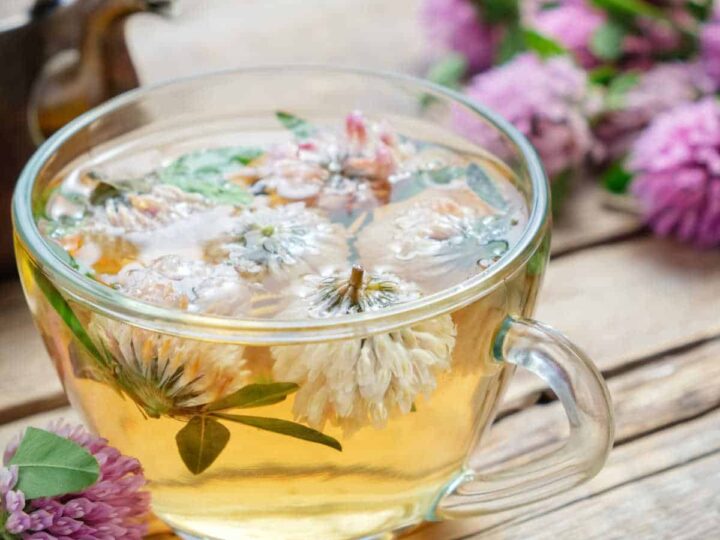
White clover tea is a gentle and soothing herbal tea with a slightly sweet floral flavor.
Ingredients
- 1/4 cup Freshly foraged white clover flowers
- 2 cups of water
Instructions
- Harvest and rinse the white clover flowers to remove any dirt or debris.
- In a pot, bring 2 cups of water to a gentle boil.
- Place the rinsed white clover flowers into a teapot or heatproof container.
- Carefully pour the boiling water over the white clover flowers in the teapot.
- Cover the teapot with a lid. Let the white clover flowers steep in the hot water for about 5-10 minutes.
- After the steeping time is up, use a fine mesh strainer or a tea infuser to strain out the white clover flowers as you pour the tea into cups.
Notes
- If you'd like, you can enhance the flavor of your white clover tea by adding a little honey, a squeeze of lemon juice, or a sprig of fresh mint.
- Remember that the flavor of white clover tea is subtle, so adjust the number of flowers and steeping time to your preference.
Nutrition Information
Yield 2 Serving Size 1 cupAmount Per Serving Calories 0Total Fat 0gSaturated Fat 0gTrans Fat 0gUnsaturated Fat 0gCholesterol 0mgSodium 9mgCarbohydrates 0gFiber 0gSugar 0gProtein 0g