




Dried citrus slices are one of those simple things that instantly make your home feel warm and cozy. Dried citrus can be used in a seasonal simmer pot, to decorate your kitchen, or to create handmade gifts. I love to use dried citrus during the holiday season as accents on party trays or in simmer pots, and they make my home smell amazing without chemical air fresheners.
The best part? You don’t need any special equipment. With just a few fresh oranges, lemons, or limes, you can create beautifully dried citrus slices using either your oven or a simple air-dry method. It’s an economical and natural way to decorate and make your home smell amazing.
In this guide, I’ll walk you through both methods step-by-step, along with storage tips, shelf life, and a printable drying guide you can keep on hand.
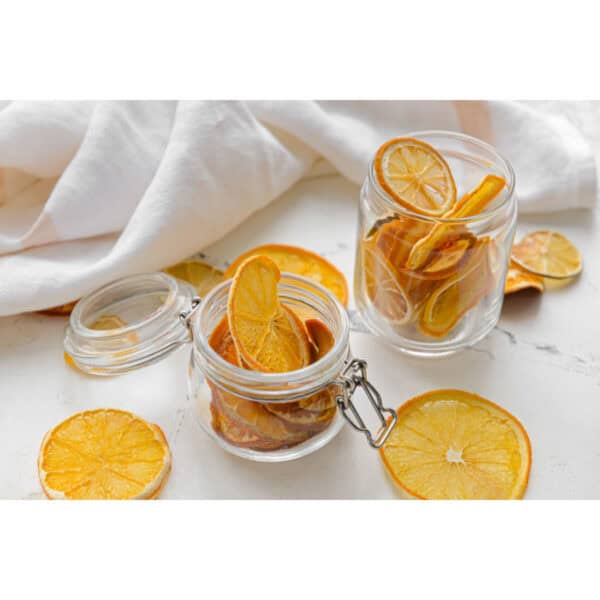
Why Dry Citrus for Simmer Pots?
Dried citrus adds both beauty and fragrance to your simmer pots. As the slices gently heat in water with herbs and spices, they release a subtle, fresh scent that feels clean and comforting.
You’ll love using dried citrus because:
- It’s budget-friendly and easy to make at home
- It stores well for months
- It looks beautiful in jars, bowls, and gift bundles
- It pairs perfectly with spices like cinnamon, cloves, and rosemary
Best Citrus Fruits to Use

You can dry almost any citrus fruit, but some work better than others.
Top choices:
- Oranges (most popular and visually appealing)
- Lemons (bright, clean scent)
- Limes (adds contrast and colour)
- Grapefruit (larger slices, slightly longer drying time)
Method 1: How to Dry Citrus in the Oven (Fastest Method)
This is the quickest and most reliable way to dry citrus, especially if you want results the same day.
Instructions
- Preheat your oven to 200°F (90°C) or the lowest setting
- Slice citrus into thin, even rounds (about 1/8 inch thick)
- Remove seeds and gently pat slices dry with a paper towel
- Place slices in a single layer on a parchment-lined baking sheet or oven-safe rack
- Bake for 2–4 hours, flipping every hour
Tips for Best Results
- Keep slices thin and even for consistent drying
- Use a wire rack if possible for better airflow
- Watch closely toward the end to prevent browning
They’re done when:
- The centers are dry (not sticky)
- The peel feels firm
- No moisture remains
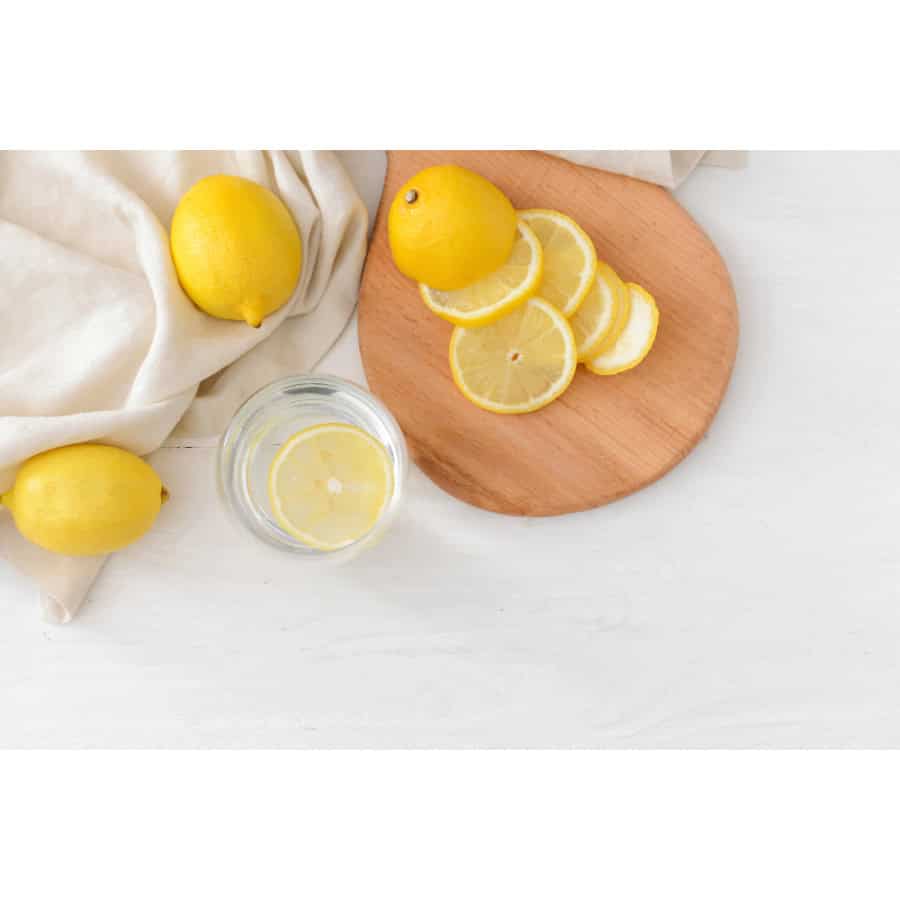
Method 2: How to Air-Dry Citrus (Natural Method)
If you prefer a slower, more natural approach, air-drying works well, especially in winter when indoor air is dry.
Instructions
- Slice citrus into thin rounds
- Pat dry to remove excess moisture
- Place slices on a drying rack or parchment paper
- Leave in a warm, dry area with good airflow
- Turn slices daily
Drying Time
- Typically 3 to 7 days, depending on humidity
Tips
- Avoid stacking slices
- Place near a sunny window or heat source
- Ensure good air circulation to prevent mould
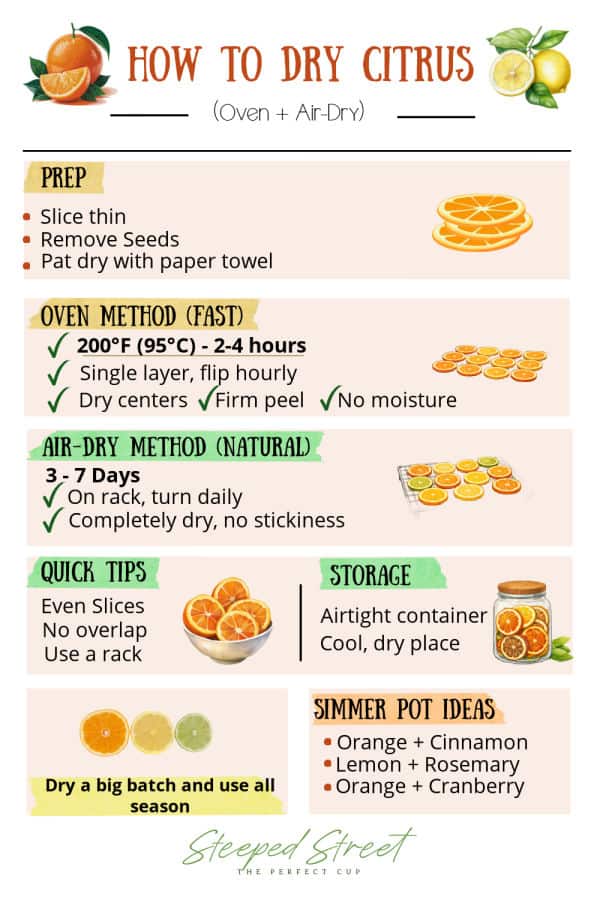
Printable Drying Guide
How to Store Dried Citrus
Once your citrus is fully dried, proper storage will keep it fresh and fragrant for months.
Storage Options

- Glass jars with lids
- Airtight containers
- Paper bags (for short-term use)
Best Practices
- Store in a cool, dry place
- Keep away from moisture and direct sunlight
- Add a silica packet if the humidity is high

How Long Does Dried Citrus Last?
When stored properly, dried citrus can last:
- 6 to 12 months for best quality
- Up to 1 year or longer if kept completely dry
Signs It’s No Longer Good
- Soft or sticky texture
- Mould or discoloration
- Musty smell
If you notice any of these, it’s best to discard and make a fresh batch.
How to Use Dried Citrus in Simmer Pots

Dried citrus works well with many ingredients. Try combinations like:
- Orange + cinnamon sticks + cloves
- Lemon + rosemary + vanilla
- Orange + cranberries + pine
Simply add your ingredients to a pot of water and let it gently simmer on low heat.
Drying citrus is one of those simple, satisfying kitchen projects that feels both practical and creative. Once you try it, you’ll likely find yourself making batches throughout the year, not just for simmer pots, but for decorating, gifting, and seasonal living.
It’s a small ritual, but one that adds warmth and intention to your home.